What Dystopia? By Matt Petree


Do you ever feel like the world is coming apart around you? Are you watching real and terrible events happen daily, feeling powerless? Are you exhausted by the constant barrage of bad news? Do you find it difficult to relate to family and friends who glorify that same bad news? Are you tired of being told that war is peace, that freedom is slavery and that ignorance is strength? Now, this isn’t a debate about what is and isn’t. I just want to provide a better outlook for whoever needs it. While we at Bazoo Books love to offer escapism to get away from the trials of real life, I feel that these books face the world as it is with acceptance and provide an honest track to contentment in tough times. 


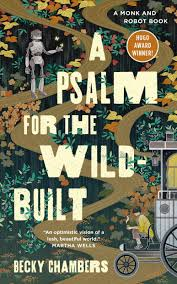
A Psalm for the Wild-Built by Becky Chambers


In only 147 pages Becky Chambers makes me care for and love a world, Panga, and characters Dex and Splendid Speckled Mosscap. I also love that name. She imagines and builds a world where kindness, curiosity, and care shape daily life. Through the journey of a tea monk and a robot, the story asks what it means to live well and with purpose. It’s not shy to say to us that connection and compassion can guide the way. The book is filled to the brim with warmth. It’s a cozy Sci-fi story showing that hope can be found in small acts of kindness and shared moments of vulnerability. It’s a tender vision of a future where humanity and nature learn to thrive together. For in Panga, humans have figured out how to live in balance with their natural world. And, of course, there are robots!


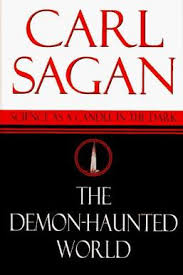
The Demon-Haunted World by Carl Sagan


Carl Sagan writes poetry with facts. His prose flows with the grace of an Icelandic stream. With little effort Sagan shows that science and critical thinking can be candles in the darkness, guiding us through confusion and fear. He makes the case that curiosity and reason are pathways to wonder and enlightenment. The book offers hope that with knowledge, people can build freer and more resilient societies. Even while warning of dangers, Sagan never lets us forget the beauty of the universe and how we humans fit within it. It stays on my special shelf at home as a book that inspires me deeply.

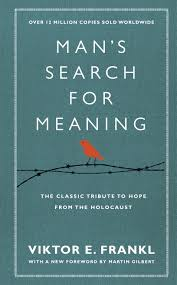
Man’s Search for Meaning by Viktor E. Frankl


This book is the heaviest of this list as Frankl, a Holocaust survivor and psychiatrist, makes the point that even in unimaginable suffering, people can still find purpose. His reflections reveal that meaning is not destroyed by hardship, but often honed through it. Not to say hardship is necessary, he offers a way to see suffering as a chance for transformation. The book highlights the resilience of the human spirit when anchored in hope and direction. It’s a powerful, and I mean powerful, reminder that meaning can guide us through even the darkest of times.

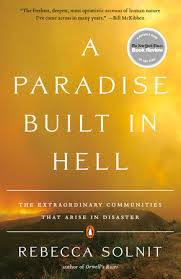
A Paradise Built in Hell by Rebecca Solnit


Solnit states that in the face of disaster, people often rise with compassion rather than collapse into chaos. She reveals stories of communities coming together and finding strength in one another, challenging the grim narrative that crises bring out only fear and selfishness. Giving us a tiny window on humanity showing that when united, we overcome everything that is thrown our way. It’s a profoundly hopeful reminder that we are capable of incredible love for one another. 
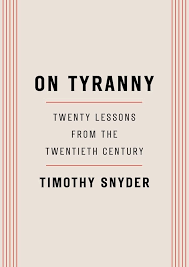
On Tyranny by Timothy Snyder


Snyder writes of twenty clear lessons drawn from history, reminding us that authoritarianism is not inevitable. He describes how ordinary people have the power to resist oppression through courage, solidarity, and small daily acts of integrity. The book encourages vigilance, but also faith in our ability to shape the future. Its message is that democracy survives when citizens choose to defend it together. It’s ultimately a hopeful guide, showing that freedom can be protected and renewed, even in the darkest of times.
---


When reading history, remember that most of what you’re reading are the happenings of the heads of state and generals and royalty. Most of what you read is not the day to day life of your average citizen or refugee or migrant. Most people are toiling behind the scenes living lives, raising families, and finding joy. These books definitely don’t solve our issues and this is just a drop in the bucket of books that can lift us up from any darkness but, hopefully they help us cope with the reality ahead of us. The best thing to quell feelings of fear is to seek to understand it. Turning away from what scares you only feeds that fear. Facing and advancing on it is the only way to stand up to it. I hope these books can inspire bravery in all of us. And if this list doesn’t do it, come see me in the store and we’ll talk about it and we can find what you’re looking for, together.
By Kelsey Wallace October 7, 2025
Laurie Halse Anderson’s words ring true now more than ever. In a world of 8.142 billion people, where technology should connect us more than ever before, we often find ourselves divided—by fear, by misunderstanding, and too often, by deliberate silence. History shows us again and again that when knowledge is restricted, societies stumble into the same mistakes, repeating old wounds under new disguises. We live in a time of immense privilege, with access to art, music, film, and literature at our fingertips—tools that nurture empathy and curiosity. Yet despite this access, entire stories are still being hidden from us, stripped away under the banner of “protection.” The fight over banned books is not simply about shelves and syllabi.It is about the preservation of truth, the protection of curiosity, and the refusal to let fear dictate our collective story. To allow censorship to stand unchallenged is to risk exchanging progress for ignorance. As a child, my mother often reminded me that you can’t control others; you can only control how you react. If something offends you, you have the power to simply turn away rather than engage. Of course, offense and actual physical harm are very different matters. Yet when we look at the criteria for banning books, it is rarely about preventing harm and almost always about avoiding discomfort. Books are most often challenged for their historical or racial themes, LGBTQ+ representation, political or religious content, sexual topics, or questions of age appropriateness. But if a book’s subject matter feels offensive to an individual, has it ever been considered that the solution could be as simple as choosing not to read it; rather than removing it from everyone else’s reach? In what follows, I will highlight some of my favorite banned books, exploring the reasons they have been challenged and what we lose when their voices are silenced. And if you’d like to judge for yourself, you can find these titles in our store. Whether to educate yourself, to satisfy your curiosity, or to decide where you stand in the conversation. 1984- George Orwell Published in 1949, Orwell spun a riveting tale warning the general public about the dangers of totalitarian government and censorship. Funny enough it was banned for those very reasons. Little Women - Louisa May Alcott Written in 1868, Little Women has been challenged time and time again due to its empowering feminine characters and its deterrence from normal gender roles. *Hot take: If reading about women choosing careers and passions makes you uncomfortable, perhaps it’s time for some self-reflection. Animal Farm- George Orwell An interesting take on communism from a farm animals point of view. This interesting story was banned because of its anti- communist undertones as well as violence. Thirteen Reasons Why- Jay Asher Asher’s novel has been banned for its exposure on mental health, bullying, and in the end suicide. Touching on topics that are very real, especially for the age group in which it was intended. The Giving Tree- Shel Silversteen What started as a cautionary children’s tale on how to treat others has been banned due to its themes of abuse and unhealthy relationships and self- sacrificing actions in order to please others. The Parables of the Sewer- Octavia Butler Set in a dystopian “future” where the characters are faced with climate change, poverty, and racism. In which the main protagonist is forced to survive and rally amongst the trials that have been thrust upon her. This book has been banned due to tough subject matter (racism, classism, and drugs) as well as its controversial take on climate change. Fahrenheit 451- Ray Bradbury The title itself is the temperature in which paper burns. This dystopian novel takes place in a futuristic society in which books are banned and burned due to provoking emotion in the readers that the government can not control. Extreme censorship that takes hold by the eradication of literature as a whole. Harry Potter- J. K Rowling This story follows a young boy who is forced to live with relatives who abused and degraded him and then gets thrown into a magical world and all of the things that that entails at the age of nine. He creates family out of friends and mentors and fights the powers of evil. This book series has been banned due to magical undertones as well as being “potentially harmful to children”. Alice in Wonderland- Lewis Carrol A familiar tale of a little girl who got curious, went down a rabbit hole, and had a wild adventure. First banned due to the hookah pipe the caterpillar used; more recently flagged due to disrespectful undertones to society. A Brave New World- Aldous Huxley A futuristic novel based on genetic engineering in order to produce a “utopian” society by streamlining generalized happiness over the individual themselves. Banned due to drug use, religious overviews, and violence. Handmades Tale- Margrett Attwood Written in 1985 this story takes place in modern times during a decline in birth rates which leads for women's rights to be stripped to the bare bones minimum for the “greater good” of overall society. Banned frequently world wide due to gender oppression, religious control, and sexual content/ violence. This book has been banned over again in school districts recently and has gained a lot of popularity due to similarities to current times. Where the Wild Things Are- Maurice Sendak A story about a child who wishes not to follow the rules so he goes to the forest, hangs out with some monsters, and eventually realizes he misses his home and structure. This book has been banned due to “encouraging disrespect to authority”, encouraging rebellion, and also been said to have dark undertones and psychological deficits on children. The Color Purple- Alice Walker An African American woman writes to God about her tragic life experiences that ends in empowerment and a strong sense of self through triumph in terrible life events. This book has been banned due to explicit violence, sexual content, racism, and religious objections. The Perks of Being a Wallflower- Stephen Chbosky Follows Charlie through his high school experience as a young boy choosing his path, dealing with his mental health, and finding friends. Challenged due to explicit drug use and language, as well as sexual undertones. Has also been banned due to its lack of positivity and for "romanticising bad mental health”. The Giver- Lois Lowry A seeming utopian society begins to produce problems very much like Huxley’s A Brave New World. Banned due to social control and rebellion to authority, as well as violence and language. The Hate U Give- Angie Thomas A young African American woman navigates the current world and its conditions. Banned due to its “negative opinion on police and its influence it may have on anti- authority” as well as violence and drug and alcohol abuse. These are a few of the many books that have been banned time and time again across the globe with the intent to “protect” the future from the negative repercussions of participating in good fiction literature. The keyword being fiction, or is it? Why is so much weight being added to these titles? To these situations that protagonists find themselves in over and over and over again, just to be silenced? What is supposed to be a form of connection, a vessel to another world or, a shoulder to cry on is weaponized and sent to the banned shelf to collect dust. It is all incredibly sad to see. Luckily there are people who care enough to keep them in stock or available to order and in a week (or two) within your reach for a lucky individual to pick up and take home and love. To see the stories as they intended. Banning books has never protected us. It has only ever left us unprepared for the world we actually live in. Pick up a banned book, read it, share it, and let it do what stories do best: remind us we are not alone.
By Cassie E. Brown August 19, 2025
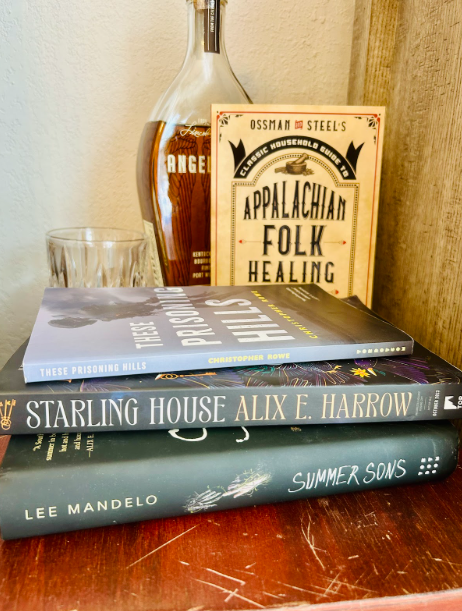
Although I was born and raised in Missouri—with Ozarkers on both sides of my family—I had the distinct pleasure of living for eleven years in east-central Kentucky. I lived in the heart of the bluegrass, surrounded by rolling hills, white rail fences, and horse farms (yes, they call them “horse farms” and not ranches, and it baffled me). I came to develop a palate for bourbon, mint juleps and old fashioneds, and I even went to the Kentucky Derby, bedecked in a big damn hat with a cluster of pink velvet roses. But I meant plenty of Appalachian folks and traveled into the rural Appalachian foothills. I learned, during my time in Kentucky, to think of Appalachians as Ozarkers’ older, more serious cousins. I fell in love with Kentucky/Appalachian writing—fantasy, gothic, horror, and even science fiction! I enjoyed time with Kentucky’s literary folks, meeting and spending time with some extremely fine authors. Reading plenty of others. Kentucky can boast of incredible working authors, essayists, and poets, such as Silas House, Carter Sickels, Frank X. Walker, Crystal Wilkinson, Barbara Kingsolver, Ada Limón, and others... But right now, I am delighted to introduce you to some fine Appalachian speculative fiction! Christopher Rowe. I have to start with my friend and mentor, Christopher Rowe ( https://www.christopherrowe.net/ ). His work is weird, deep, and smart as hell. Probably his most approachable work is the novella, THE NAVIGATING FOX. This novella brings you into a world of talking animals, trickery, and possibly the end of the world. It’s, by turns, wise and weird, with you turning pages for the thing that’s just beyond the edge of your awareness. You can also read the short story “Knowledgeable Creatures” related to THE NAVIGATING FOX, here: https://reactormag.com/knowledgeable-creatures-christopher-rowe// . But please, don’t stop there. Get THESE PRISONING HILLS into your life for the weirdest science fiction ride through the future you’ve never imagined! For Rowe’s weird Appalachian science fiction (his rural fabulism), jump straight into THESE PRISONING HILLS. If you want to know where each comes from, you can read the highly lauded novelette “The Voluntary State” related to THESE PRISONING HILLS here: https://www.lexal.net/scifi/scifiction/originals/originals_archive/rowe/rowe1.html . Alix E. Harrow. Alix E. Harrow ( https://alixeharrow.wixsite.com/author/short-fiction ) writes fantasy and southern gothic novels that are breathtaking in the power of their prose. The complexity of the plotting of the far-reaching THE ONCE AND FUTURE WITCHES takes folk magic and fairy tales and sisterhood, and weaves them together impossibly beautifully against a backdrop a world where men fear women’s power. It is chillingly recognizable, and yet magically distant. THE ONCE AND FUTURE WITCHES was on my “must-read” or “best of” lists for easily two years after I read it. And when I say that Alix E. Harrow’s prose is breathtaking, it is also powerfully well-observed. In STARLING HOUSE, she writes a gothic “haunted house” (or is it?) tale set in modern Kentucky. Her details are so sharp, you’ll gasp at how recognizable the small-town characters are. (And the places… there may be mention of a Mexican restaurant that used to be a Hardee’s.) And, of course, THE TEN-THOUSAND DOORS OF JANUARY is a fabulous fantasy novel that rushes along through worlds real and imagined with equal beauty and ferocity. Harrow is a delight! (And if you want to read some of her darker, short fiction, I recommend starting with “Mr. Death”: https://www.apexbookcompany.com/a/blog/apex-magazine/post/mr-death and “The Long Way Up”: https://psychopomp.com/deadlands/issue-09/the-long-way-up My suggestion? Have tissues at the ready!) Lee Mandelo. Lee Mandelo ( https://leemandelo.com/ ) is brilliant, queer, and his books are a combination of scary and weirdly sexy that makes you feel some kind of way. If gay ghosts, comeuppance historical feminism, or mean protagonists make you uncomfortable, well, give Lee a miss. But if you’re looking for writing that alternates between hot and chilling, with superlative prose and a sense of place that draws you in, don’t sleep on him. Lee’s works include the incredible gothic, SUMMER SONS, as well as FEED THEM SILENCE and the chilling novella, THE WOODS ALL BLACK. I just finished THE WOODS ALL BLACK and I’m still recovering, thank you very much! Part of me is still in far eastern Appalachia in the early twentieth century, with a shell shocked World War I veteran and a town seething with so much hatred, you can practically taste it in the water like coal slag… If these sound interesting, grab them at Bazoo Books or order them on Bazoo’s corner of Bookshop. https://bookshop.org/shop/bazoobooks . Don’t forget to support your local, independent bookseller! Bonus Material! If you’re looking to lean into the Appalachian vibe, and horror is your thing, I cannot recommend highly enough the podcast “Old Gods of Appalachia” ( https://www.oldgodsofappalachia.com/ ) It is lovely, lush, intricate, beautiful, and disturbing. It is written by actual Appalachian folks, and when you hear it—the rich sound palate, the history, the superstitions, the people—you will understand why I call Appalachians cousins. (And my final, final tip: if you fall in love with the world of the Old Gods of Appalachia podcast, they also made a tabletop role-playing game system for the world they create.)
By Bazoo Books July 22, 2025
This blog is our little dispatch to the outside world, a place where we hope to share the latest buzz from the book world, updates from the shop, staff picks, themed recommendations, upcoming events, and the occasional philosophical rambling like this one. We believe there is a growing hunger for authenticity and it isn’t a trend, it’s a sign. People are tired. They’re craving stories that matter, art that heals, and communities that care. As a bookstore, it’s our privilege to be part of that. We want to provide a shelter for these ideas and allow people to search and learn and discover. We want to provide an escape from the hustle and bustle or a thrill when you are seeking. Maybe you want to do a deep dive into a subject you heard about on that one podcast. Books can provide insight or entertainment. They can also provide a window into our neighbors lives and a way for us to remind ourselves that everyone’s lives are complicated and hard but, it’s always better to go through it together rather than apart. That’s why we do what we do. Yes, we sell books. But more than that, we champion the power of literacy and the belief that reading and writing can help humanity grow beyond its natural bounds. Supporting small, local bookstores like ours isn't just about buying books, it's about building resilient communities, encouraging creative engagement, and keeping space for wonder, reflection, and resistance in a world that’s moving fast and loud. Literacy has real power. There’s a reason it’s so often silenced or controlled but, we believe books are tools as sharp as any blade. They are maps, or hammers and crystal balls, or whatever you need at any moment you find yourself in need. We are so proud to share them with all of you. So whether you’re here for book news, creative inspiration, or just something to make your heart feel a little less weird, welcome. We’re glad you’re here. -Bazoo Books